What You Can and Can’t Change on a Grade II Listed Building
Grade II is the most common category of listed status in England, which leads a lot of owners to assume it comes with a lighter touch than Grade I or Grade II*. In practice, the legal protection is the same. Once a building is on the National Heritage List, any work that could affect its special interest needs Listed Building Consent, regardless of grade.
This guide sets out what you can usually change without consent, what almost always needs it, what happens if work goes ahead without the right approvals, and how to apply properly the first time.
What Grade II Status Actually Protects
Around 91.7% of listed buildings in England are Grade II, covering everything from ordinary Georgian terraces to shopfronts and civic buildings. The protection applies to the whole building, inside and out, not just the parts visible from the street. It can also extend to outbuildings, boundary walls and other structures within the curtilage.
Being Grade II rather than Grade I or Grade II* does not mean less oversight. It means the building has been assessed as being of special interest rather than exceptional or particularly important interest. The consent process, and the penalties for getting it wrong, are the same across all three grades.
Changes You Can Usually Make Without Consent
Some works fall outside Listed Building Consent because they do not affect the character of the building. This typically includes straightforward, like-for-like maintenance and decoration, such as repainting a previously painted surface in the same colour, replacing damaged plaster with a matching mix, or servicing existing boilers and electrics without altering the fabric.
The word “usually” matters here. Local planning authorities interpret this differently, and what counts as minor in one borough can trigger a consent requirement in another. If there is any doubt, it is worth getting written confirmation from the conservation officer before work starts rather than relying on a general rule of thumb.
Changes That Almost Always Need Listed Building Consent
The following works are the ones that most commonly catch owners out, either because they seem minor or because they were allowed on a neighbouring, unlisted property.
| Type of Work | Consent Usually Needed? |
|---|---|
| Extensions or new openings | Yes |
| Replacing windows or doors | Yes |
| Removing internal walls | Yes |
| Removing or altering fireplaces and staircases | Yes |
| Repointing with a different mortar mix | Yes |
| Painting previously unpainted brick or stone | Yes |
| Replacing roof coverings with a different material | Yes |
| Signage and shopfront changes on commercial units | Yes |
What Happens If You Carry Out Unauthorised Work
Carrying out unauthorised work on a listed building is a criminal offence under Section 9 of the Planning (Listed Buildings and Conservation Areas) Act 1990. It is an offence of strict liability, which means it does not matter whether the work was done knowingly or by mistake. Unlike a standard planning breach, there is no time limit on enforcement action for unauthorised listed building works.
Local authorities can serve a Listed Building Enforcement Notice requiring the building to be reinstated to its original condition, at the owner’s cost, and can prosecute separately. For anyone buying a listed property, it is worth checking the planning history for unresolved enforcement issues before exchange, since the liability can pass with the building.
A Grade II Refurbishment Done Properly
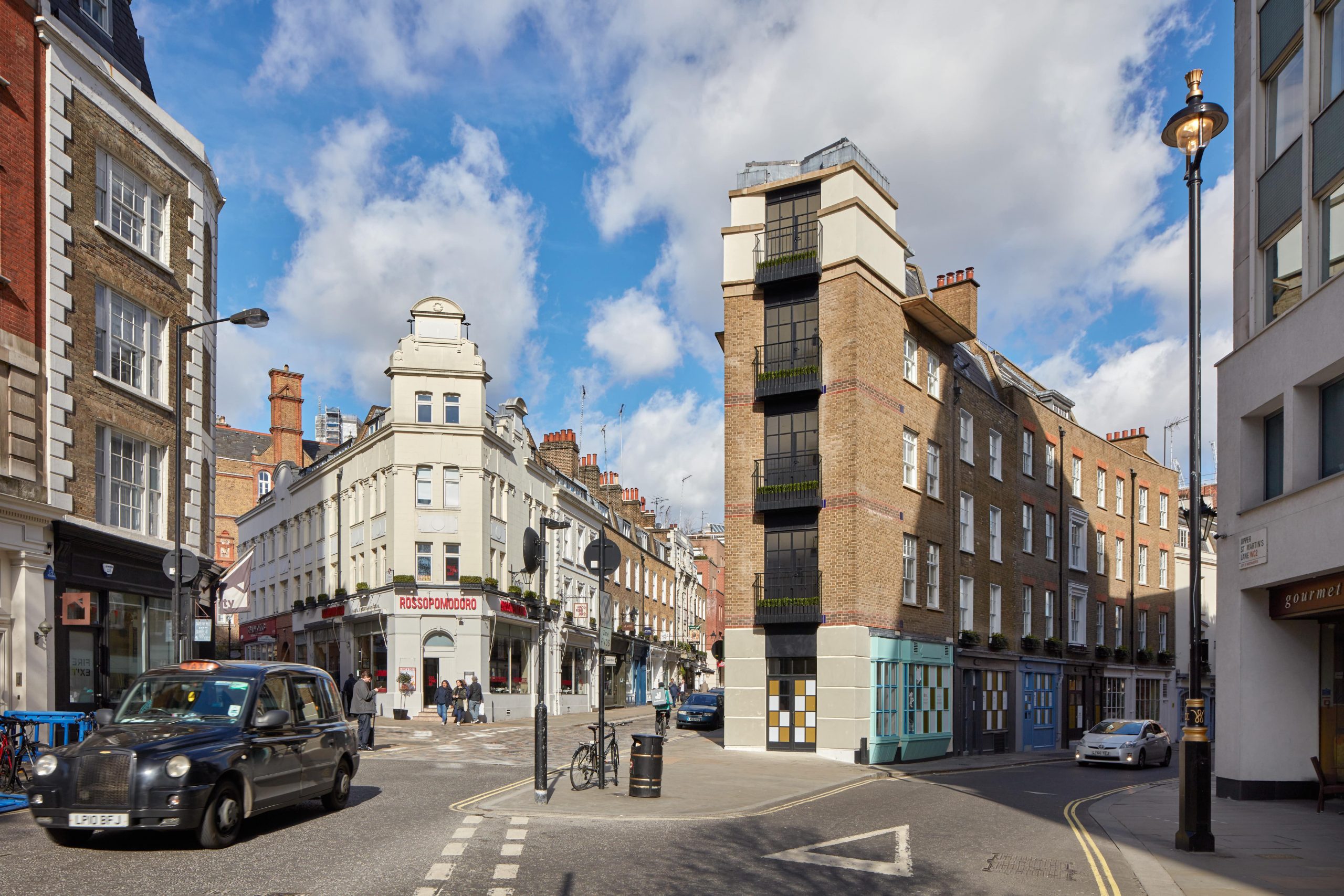
Our work at 65-75 Monmouth Street in Covent Garden shows how much change is possible on a Grade II listed building when it is planned and consented correctly. The project reconfigured a listed terrace into flats, offices and retail units, all delivered through the proper Listed Building Consent route rather than working around it.
The lesson from projects like this is not that listed status blocks ambitious change. It is that the change has to go through the right process, with the right specialists involved from the start, rather than treating consent as an afterthought.
How to Apply for Listed Building Consent
Applications go to the local planning authority, usually alongside or ahead of any standard planning application, and typically need a heritage statement or method statement explaining the proposed works and their impact on the building’s special interest. Most authorities aim to determine applications within eight weeks, though complex or contested cases can take longer.
Pre-application advice is worth the modest fee it usually costs. Getting informal feedback from a conservation officer before a full application goes in can save months of redesign later, particularly on projects involving Listed Building Consent for structural or internal changes.
Getting Professional Advice Before You Start
Because the rules are applied inconsistently between boroughs, and because the penalties for getting it wrong are serious, most owners get better outcomes by involving a specialist early rather than after work has started. A chartered surveyor or consultancy experienced in historic building conservation can flag which elements of a scheme are likely to need consent, prepare the supporting documents, and manage the relationship with the conservation officer through to sign-off.
Frequently Asked Questions
Can I extend a Grade II listed building?
Yes, but the extension will almost always need both Listed Building Consent and standard planning permission. Conservation officers look closely at scale, materials and how the addition relates to the historic fabric, so a well-considered design has a much better chance of approval than a generic extension.
Do I need consent to replace windows on a Grade II listed building?
In most cases, yes. Window replacement is one of the most common sources of unauthorised works on listed buildings, because owners assume double glazing or draught-proofing counts as maintenance. If the frames, glazing pattern or material would change, consent is normally required.
What is the difference between Grade II and Grade II*?
Grade II covers buildings of special interest, around 91.7% of listed buildings in England. Grade II* covers particularly important buildings of more than special interest, around 5.8% of the total. Both require Listed Building Consent for the same range of works; the difference is in the level of significance Historic England has assigned to the building, not in the consent process itself.
How long does Listed Building Consent take?
Most local authorities aim to determine straightforward applications within eight weeks. Applications involving more significant alterations, or where the conservation officer requests further information, can take considerably longer, so it is worth building this into any project timeline.
Can I be prosecuted for unauthorised work on a listed building?
Yes. Unauthorised work is a criminal offence under Section 9 of the Planning (Listed Buildings and Conservation Areas) Act 1990, and prosecution does not depend on whether the work was carried out knowingly. Local authorities can also require the building to be reinstated at the owner’s expense.
How Fresson and Tee Can Help
We work on Grade II and Grade II* buildings across Central London on a regular basis, taking projects from initial feasibility through to Listed Building Consent and completed works. Recent examples include the reconfiguration of 65-75 Monmouth Street into flats, offices and retail units, and external restoration works at China Works in Vauxhall, also Grade II, delivered for Workspace Group.
Where a project needs coordinating across surveying, design and delivery, our project management team can run point on the consent process alongside the build, so nothing gets held up waiting on approvals.
If you would like to talk through a project on a Grade II listed building, please call our office on 020 7391 7100 or email us at surveyor@fandt.com.